

Cooling Tower Market Projected to Hit US$7.4 Billion by 2033 Amid Rising Industrial Cooling Demand
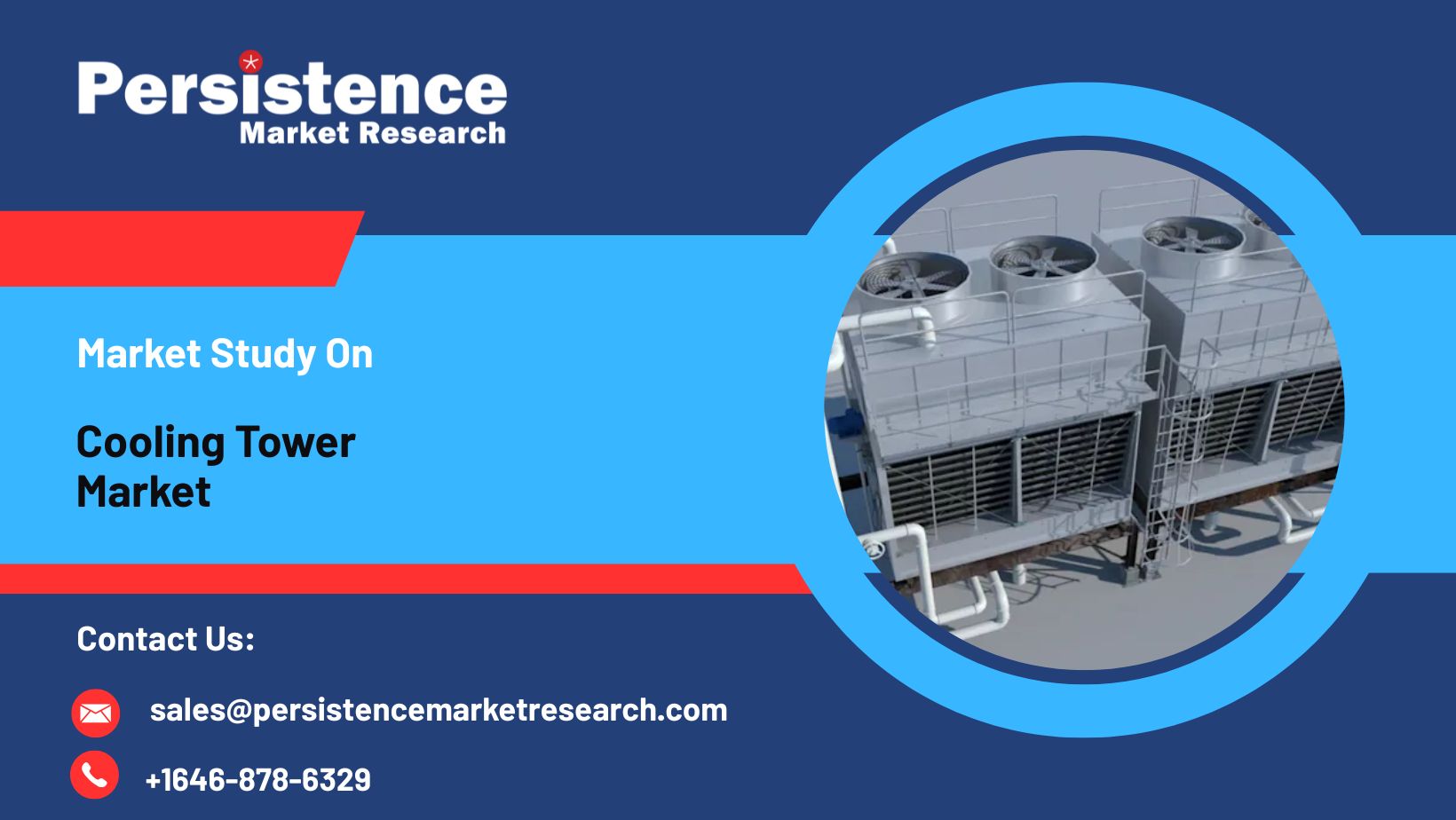
Cooling Tower Market
Driven by growing data center deployments and rising adoption of district cooling infrastructure in urban areas.
LONDON, LONDON, UNITED KINGDOM, May 31, 2026 /EINPresswire.com/ -- The global cooling tower market is witnessing consistent growth due to increasing industrialization, rapid urban infrastructure development, and rising demand for efficient thermal management systems across industries. Cooling towers are essential components used to remove excess heat from industrial processes, HVAC systems, power plants, and commercial facilities. Industries are increasingly investing in energy-efficient cooling solutions to improve operational efficiency and reduce energy consumption. The growing deployment of hyperscale data centers and digital infrastructure is also creating strong demand for advanced cooling tower systems worldwide.
The global cooling tower market size is likely to be valued at US$4.6 billion in 2026 and is predicted to reach US$7.4 billion by 2033, growing at a CAGR of 7.2% during the forecast period from 2026 to 2033. The market is primarily driven by rising deployment of data centers that require continuous and efficient heat rejection systems. Increasing adoption of district cooling projects across urban developments is further fueling demand for centralized cooling infrastructure. Wet cooling towers remain the leading product segment due to their high cooling efficiency and widespread industrial use. Asia Pacific dominates the global market because of strong industrial growth, rapid infrastructure expansion, and increasing manufacturing activities in countries such as China, India, and Japan.
𝐃𝐨𝐰𝐧𝐥𝐨𝐚𝐝 𝐅𝐫𝐞𝐞 𝐒𝐚𝐦𝐩𝐥𝐞 & 𝐂𝐡𝐞𝐜𝐤 𝐭𝐡𝐞 𝐋𝐚𝐭𝐞𝐬𝐭 𝐌𝐚𝐫𝐤𝐞𝐭 𝐀𝐧𝐚𝐥𝐲𝐬𝐢𝐬:https://www.persistencemarketresearch.com/samples/35855
Key Highlights from the Report
• The cooling tower market is projected to reach US$7.4 billion by 2033.
• Rising data center construction is increasing demand for cooling infrastructure.
• Wet cooling towers account for the largest share of the market.
• Asia Pacific leads the market due to rapid industrialization and urbanization.
• District cooling projects are supporting demand for centralized cooling systems.
• Energy-efficient cooling technologies are gaining strong market traction.
Market Segmentation
The cooling tower market is segmented based on product type, design, application, and end-use industry. By product type, the market includes wet cooling towers, dry cooling towers, and hybrid cooling towers. Wet cooling towers dominate the market because they provide efficient cooling performance at relatively lower operating costs, making them suitable for industrial plants and commercial facilities. Hybrid cooling towers are also gaining popularity due to their ability to reduce water consumption while maintaining operational efficiency.
Based on design, the market is categorized into natural draft and mechanical draft cooling towers. Mechanical draft cooling towers hold a significant market share because they provide better airflow control and are widely used in industrial manufacturing units, HVAC systems, and data centers. In terms of application, cooling towers are extensively used in power generation, petrochemical processing, food and beverage manufacturing, HVAC systems, and industrial production facilities. The industrial and power generation sectors remain major end users due to their continuous need for heat management and process cooling.
Regional Insights
Asia Pacific dominates the global cooling tower market and is expected to maintain its leadership during the forecast period. The region benefits from rapid industrial expansion, increasing investments in manufacturing facilities, and strong urban infrastructure development. China and India are major contributors due to rising industrial output, expanding smart city projects, and growing deployment of commercial cooling systems. Increasing investments in district cooling infrastructure are also supporting market growth across urban areas in the region.
North America represents another significant market due to the rapid expansion of hyperscale data centers and commercial infrastructure. The United States leads the regional market because of increasing demand for energy-efficient cooling systems across data centers and industrial facilities. Europe is witnessing stable growth driven by strict environmental regulations and rising adoption of sustainable cooling technologies. Meanwhile, the Middle East is emerging as a promising market due to increasing district cooling projects in large commercial and residential developments.
𝐑𝐞𝐪𝐮𝐞𝐬𝐭 𝐒𝐭𝐫𝐚𝐭𝐞𝐠𝐢𝐜 𝐌𝐚𝐫𝐤𝐞𝐭 𝐂𝐮𝐬𝐭𝐨𝐦𝐢𝐳𝐚𝐭𝐢𝐨𝐧: https://www.persistencemarketresearch.com/request-customization/35855
Market Drivers
One of the primary factors driving the cooling tower market is the increasing deployment of data centers worldwide. Data centers generate substantial heat during operations and require efficient cooling systems to ensure uninterrupted performance and equipment reliability. Growing demand for cloud computing, artificial intelligence, and digital services is significantly increasing investments in advanced cooling infrastructure, thereby boosting the adoption of cooling towers.
Another major driver is the rising implementation of district cooling systems across urban developments. District cooling solutions provide centralized cooling for multiple buildings, helping reduce energy consumption and operational costs. Governments and private developers are increasingly focusing on sustainable infrastructure projects, which is positively impacting the adoption of cooling tower technologies.
Market Restraints
Despite strong growth opportunities, the cooling tower market faces certain restraints. High installation and maintenance costs remain major challenges for industrial operators and commercial building owners. Cooling towers require regular inspection, water treatment, and system maintenance to maintain operational efficiency and prevent corrosion or contamination issues.
Environmental concerns related to water usage also affect market growth. Traditional cooling towers consume large amounts of water, which may create sustainability challenges in water-scarce regions.
Market Opportunities
The growing demand for sustainable and energy-efficient cooling systems is creating substantial opportunities for market participants. Manufacturers are increasingly developing advanced cooling towers equipped with smart monitoring systems, IoT-enabled controls, and water-saving technologies. Hybrid cooling towers are gaining attention as industries seek environmentally friendly solutions with lower operational costs.
Emerging economies also present significant growth opportunities due to expanding industrial infrastructure and urbanization. Increasing investments in smart cities, commercial complexes, and manufacturing facilities are expected to drive demand for advanced cooling systems in the coming years.
𝐁𝐮𝐲 𝐍𝐨𝐰 𝐭𝐡𝐞 𝐃𝐞𝐭𝐚𝐢𝐥𝐞𝐝 𝐑𝐞𝐩𝐨𝐫𝐭: https://www.persistencemarketresearch.com/checkout/35855
Company Insights
• SPX Cooling Technologies
• Baltimore Aircoil Company
• EVAPCO Inc.
• Hamon Group
• Delta Cooling Towers Inc.
• Paharpur Cooling Towers Ltd.
Recent developments in the market include the launch of energy-efficient hybrid cooling towers and increasing investments in smart cooling technologies designed for data center applications.
𝐑𝐞𝐥𝐚𝐭𝐞𝐝 𝐑𝐞𝐩𝐨𝐫𝐭𝐬:
Automatic Fireball Extinguisher Market : The automatic fireball extinguisher market is projected to reach US$1,527.1 Mn by 2033, growing at a CAGR of 6.2% from 2026.
Solid State Relay Market : The solid state relay market is projected to reach US$2.4 billion by 2033, growing at a CAGR of 6.4% from 2026.
Ganesh Dukare
Persistence Market Research
+1 646-878-6329
email us here
Visit us on social media:
LinkedIn
Instagram
Facebook
YouTube
X
Legal Disclaimer:
EIN Presswire provides this news content "as is" without warranty of any kind. We do not accept any responsibility or liability for the accuracy, content, images, videos, licenses, completeness, legality, or reliability of the information contained in this article. If you have any complaints or copyright issues related to this article, kindly contact the author above.
